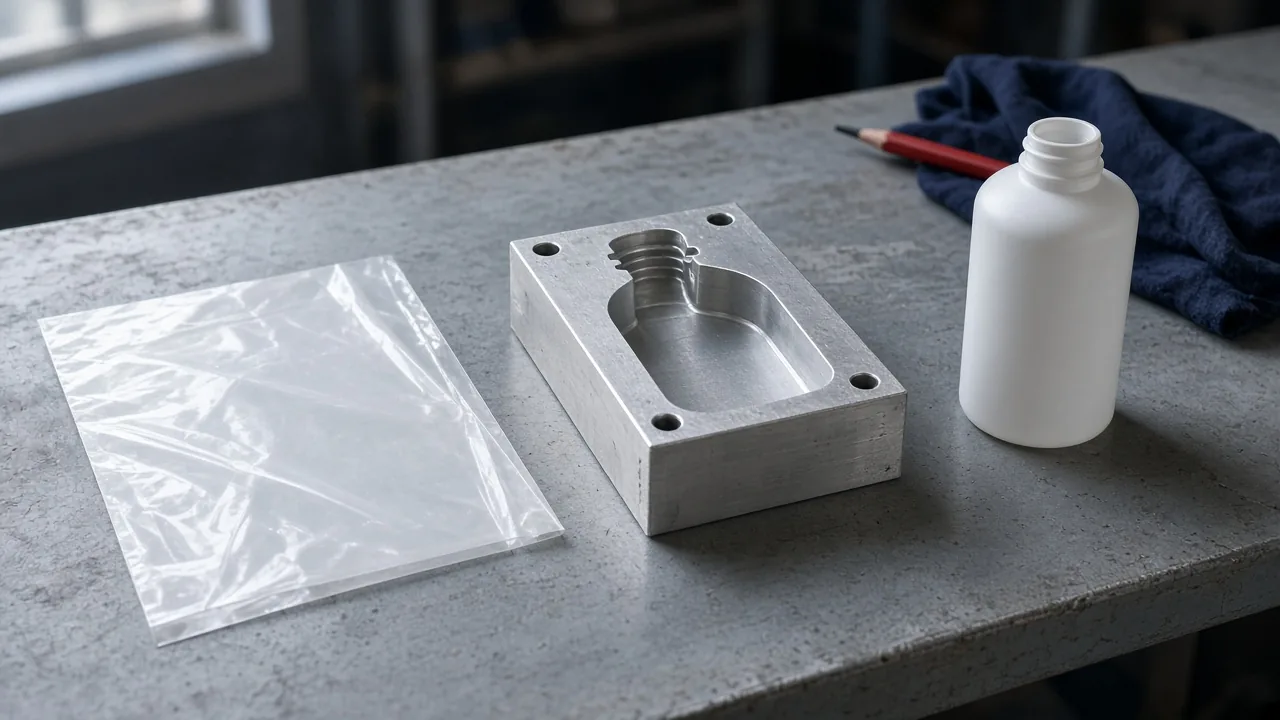
In-Mold Labels: Define the Container-Molding Handoff
Record the forming route, the moment the label enters the mold, and who approves the molded sample before reusing a finished-bottle label requirement.
From material choice
to the finished bottle.
THE REFERENCE / Equipment
Define the label and container requirements that a labeling system must accommodate.
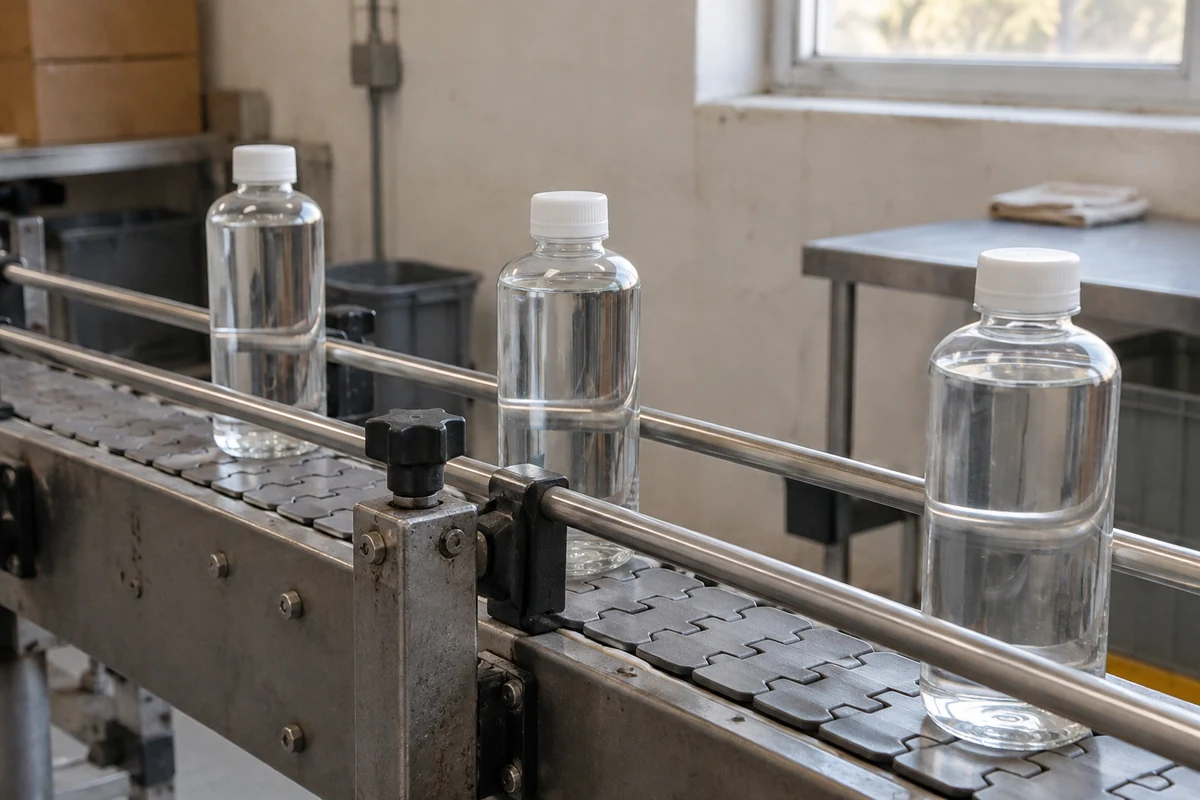
This section approaches labeling equipment through the package: container geometry, orientation, label presentation and the condition of the bottle arriving from filling and capping. It helps packaging teams describe an application task and evidence to request during a trial. It does not rank machinery suppliers or promise throughput.
For a complementary view, continue to Packaging Cases.
To turn container shape and label positions into equipment questions, read Inline vs. Rotary Labeling: Define the Container Requirements. Define support and orientation requirements before comparing machine layouts.
Before a filled and capped bottle enters labeling, use From Filling and Capping to Labeling: A Label-Ready Bottle Checklist. Record the surface, posture and spacing handed over by the upstream process.
When the label has to enter the mold while the container is formed, start with In-Mold Labels: Define the Container-Molding Handoff. Name the forming route and the moment the label enters the mold before you reuse a requirement written for a finished bottle.
Record the forming route, the moment the label enters the mold, and who approves the molded sample before reusing a finished-bottle label requirement.
Prepare a press-specific service and warranty handover record around Durst's planned MPS acquisition, keeping announced channels separate from contract terms.
Turn PRINTING United's automation, AI and convergence themes into label-job evidence, supplier questions and a documented post-show follow-up record.
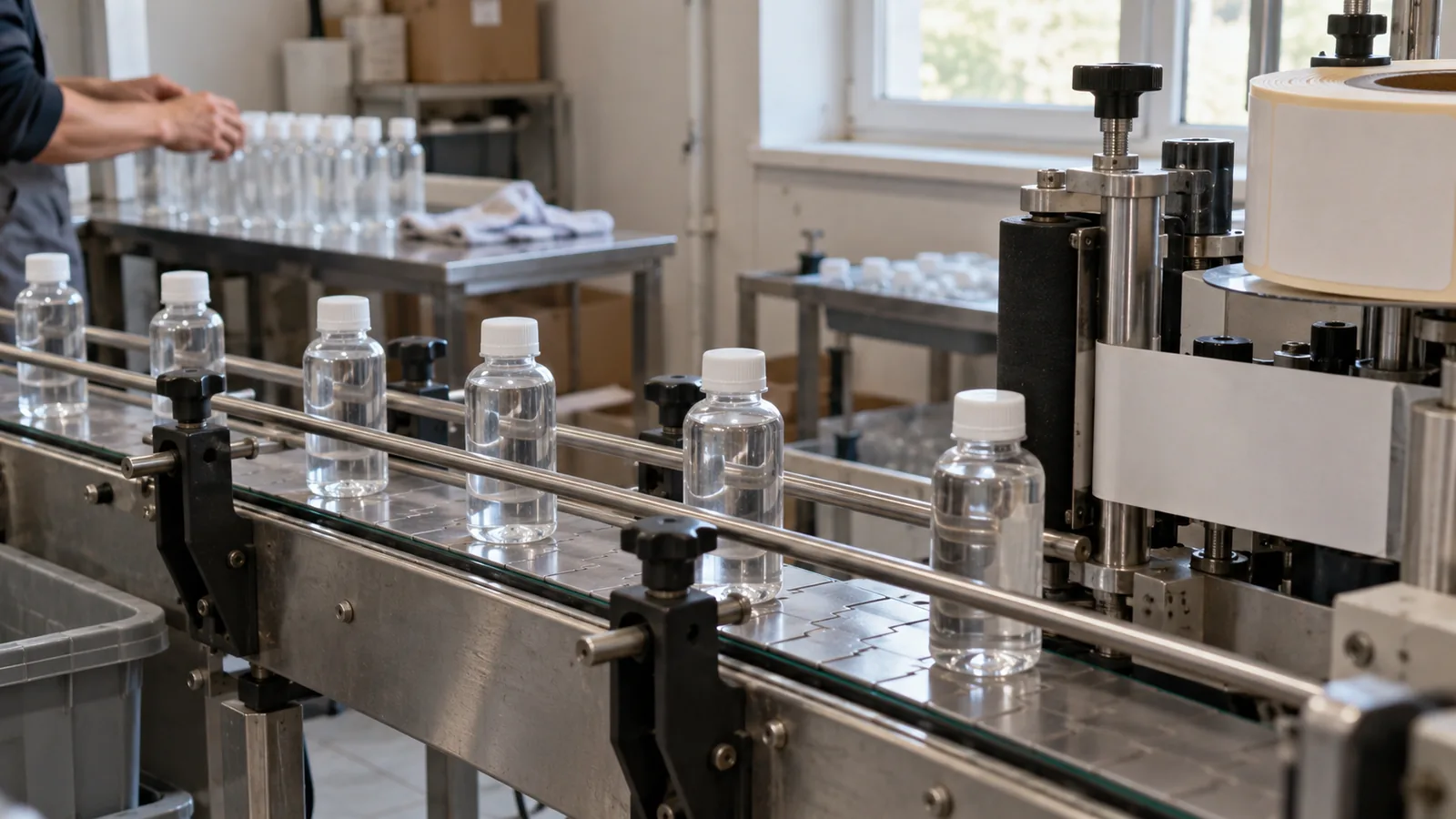
Record the filled, capped bottle surface, posture, spacing and contact areas at the labeling entrance before interpreting a label defect.
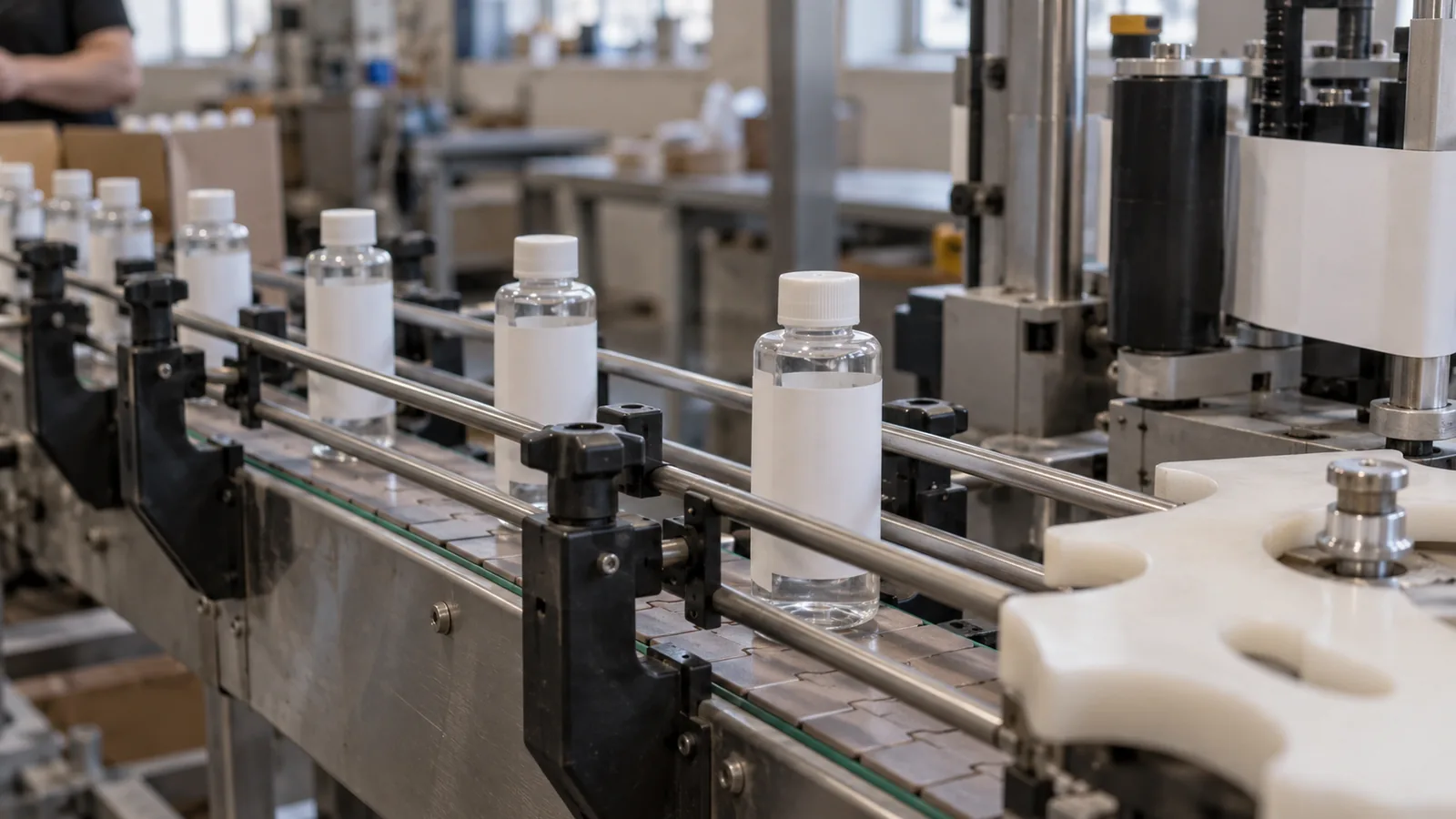
Define bottle support, orientation and label positions before comparing inline and rotary layouts, using the same identified container samples.