A broad trade-show theme can waste a demonstration if it never becomes a concrete label-production question. Turn each PRINTING United follow-up into an identified job, a proposed configuration and an evidence request before treating it as a purchase candidate.
The post-show reports describe a three-day Las Vegas event, approximately 27,000 registered attendees and themes including automation, AI and convergence. The attendance figure is an organizer-reported preliminary result, not an independently audited label-buyer count. For a label equipment buyer, the useful next step is to ask what a supplier can demonstrate on the buyer’s own construction and workflow. This article supplies a follow-up record, not a list of tested show launches.
- Separate the event report from a supplier’s product claim.
- Specify the label job before comparing demonstrations.
- Name the operator task, data input or process boundary a feature is meant to change.
- Retain evidence and open questions with the proposed configuration.
What the post-show announcement actually reports
The reports establish what the organizer and the coverage say about the event. They do not establish that a particular label machine can perform a buyer’s task. INKISH’s retrospective highlights AI, automation and convergence across print markets; the Alliance announcement reprinted by Mailing Systems Technology provides the preliminary event context. Keep that event scope separate from product-specific evidence.
| Reported event item | Source nature | What it does not establish |
|---|---|---|
| Three-day event in Las Vegas | Post-show reports | The conditions of an individual press demonstration |
| Approximately 27,000 registered attendees | Preliminary organizer figure, repeated in coverage | Audited attendance or the number of label equipment buyers |
| Automation, AI and convergence themes | Event summary and retrospective | A supplier’s delivered feature or a measured benefit |
| Product introductions across print markets | Broad event coverage | A verified label-specific product shortlist |
The equipment section provides a separate route to container-handling requirements. Use the printing and application section to keep printing, finishing and subsequent label application distinct when identifying the project task.
Takeaway: Use the show report as context, then obtain evidence for the actual candidate.
Who should turn a show lead into a follow-up task?
Assign the lead to the person who can define the problem it is meant to solve. Purchasing may hold the contact, while production owns the job evidence and another team owns the data interface. The following assignments are an editorial suggestion. They do not imply that a particular supplier or technology is suitable for every label business.
| Buyer role | Useful question after the show | Output for the follow-up |
|---|---|---|
| Production lead | Which actual label job is the demonstration meant to represent? | Identified sample and job conditions |
| Operations lead | Which current task or handoff is the proposed change addressing? | Recorded starting workflow |
| Data or workflow owner | What inputs, outputs and access does the proposal require? | Interface questions and actual data example |
| Purchasing lead | What exact configuration and support scope is being discussed? | Written proposal reference |
| Quality or application reviewer | Which result would satisfy the customer requirement? | Agreed observation and acceptance criteria |
Keep the pressure-sensitive label construction with the job file when that is the supplied format. The usable label-zone record supplies the physical panel information if the proposed workflow continues through application on small containers.
Takeaway: Give each lead a problem owner and a defined output.
Translate automation, AI and convergence into evidence
Ask what the proposed feature actually changes, and what a demonstration will show. A feature name does not identify the operator action, data source or process boundary. The matrix below translates the event themes into questions for a supplier. It claims no installed capability, measured saving or error rate for any system mentioned at the show.
| Theme in the coverage | Project question | Evidence to request | Decision to record |
|---|---|---|---|
| Automation | Which operator action or transfer is changed? | Demonstration of the named task and remaining manual work | Whether it addresses the recorded problem |
| AI | What input produces what proposed output? | Representative input/output, review steps and exceptions | Whether the result meets the project requirement |
| Connected workflow | Where does job information enter and leave? | Actual interface scope and sample records | Which handoff remains unresolved |
| Convergence | Which additional application is proposed? | Sample job on the actual substrate and configuration | Whether the new task has supporting evidence |
Generated editorial illustration — equipment and data are separate evaluation objects; no working AI feature or interface is shown.
Common mistake: Treating an automation headline as a description of the buyer’s actual starting and finishing workflow.
For a bottle line, the label-ready handoff checklist helps define observable conditions at a transfer. The inline-versus-rotary container matrix keeps the package requirement separate from an equipment layout name.
Takeaway: Replace a broad theme with a named task and an observable result.
Run a demonstration around your own label job
Give competing proposals the same identified task and record any differences in their demonstrations. Define the material, artwork, intended result and required interfaces before the demonstration. Keep those planned requirements separate from what the supplier actually runs. A successful show sample may introduce a possibility without representing the buyer’s construction or production conditions.

Generated editorial illustration — the objects represent job inputs to identify, not a demonstrated machine capability.
| Job field | Requirement prepared before the demonstration | Actual demonstrated condition |
|---|---|---|
| Construction | Actual face, adhesive, liner and finishing references | Materials supplied for the demonstration |
| Artwork | Approved revision and required appearance | Actual job file and retained samples |
| Format or change | Named variants relevant to the project | Variants actually demonstrated |
| Workflow input | Representative order or job record | Input used and resulting output |
| Operator work | Named starting task | Observed remaining actions and exceptions |
| Proposed configuration | Written candidate identity | Demonstrated options and excluded scope |
| Customer criterion | Agreed result or observation | Recorded result, with sample reference |
Use the complete-construction comparison to preserve material identities, and the bottle artwork proof guide when appearance depends on the actual container. Record a defect in the observation log before treating it as a diagnosis or a supplier ranking.
Keep a claim outside the demonstrated scope open. Do not silently merge a brochure specification, show conversation and observed result into one “verified” entry.
Takeaway: A useful demonstration answers the buyer’s task under recorded conditions.
When to follow up after the show
Use project milestones to organize the follow-up, rather than invent a fixed post-show buying window. First retain the original claim and contact; next obtain a configuration-specific response; then decide whether a sample demonstration would resolve the project question. The dates below distinguish an actual dated report from the buyer’s own scheduling decisions.
| Event or checkpoint | Date or trigger | Nature | Suggested next action |
|---|---|---|---|
| Post-show announcement reprinted | September 29, 2026 | Mailing Systems Technology publication date | Keep event context separate from candidate evidence |
| Lead assigned internally | Your actual follow-up date | Buyer decision | Identify the problem and responsible owner |
| Supplier proposal received | Actual document date | Candidate-specific response | Check configuration, scope and unresolved items |
| Demonstration considered | When a defined question needs observation | Project decision | Agree inputs and acceptance criteria |
| Purchase review | Your actual approval milestone | Buyer decision | Reconcile evidence, terms and open questions |
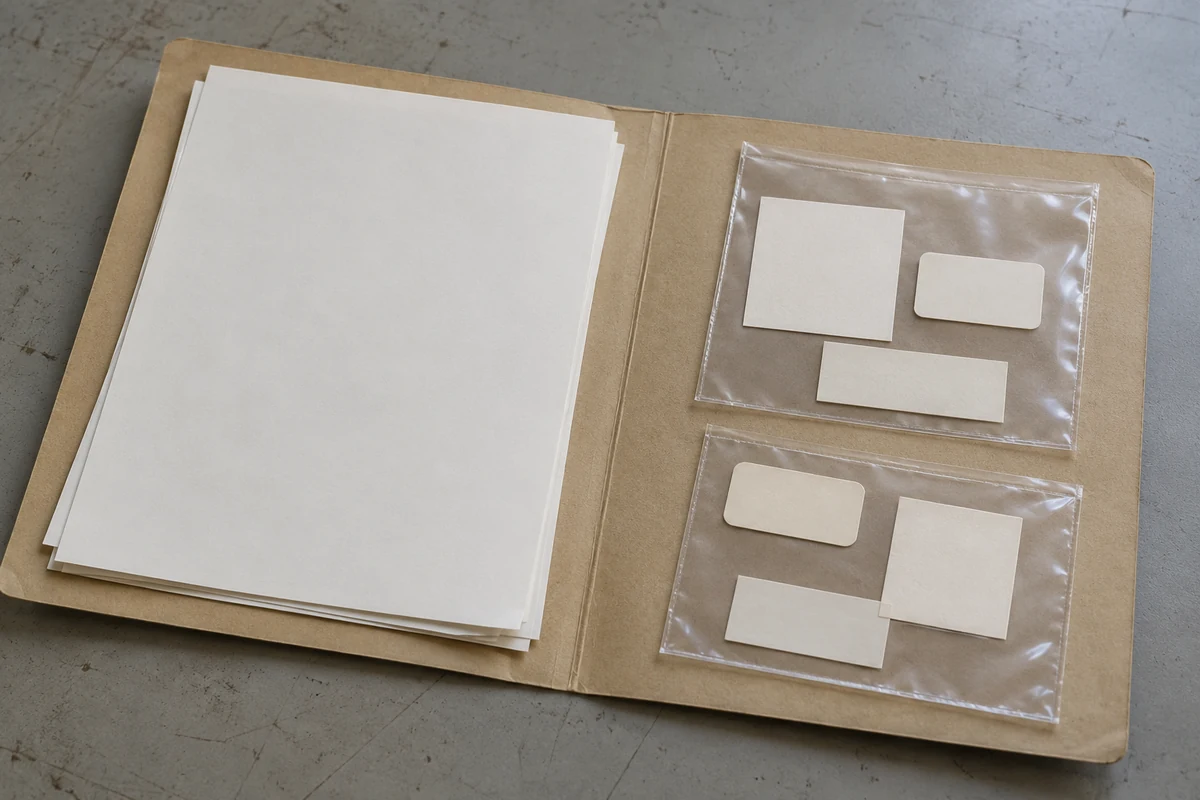
Generated editorial illustration — separate samples, documents and unanswered questions in the follow-up file; no supplier promise is shown.
Use this blank supplier follow-up card alongside the job record. It is an editorial suggestion; enter actual documents and observations, leaving unanswered fields blank.
| Follow-up field | Project entry |
|---|---|
| Supplier / contact / responsible internal owner | ___ / ___ / ___ |
| Job / sample / proposed configuration references | ___ / ___ / ___ |
| Original claim or proposal / document date | ___ / ___ |
| Evidence received / demonstrated conditions / observer and date | ___ / ___ / ___ |
| Open question / evidence provider | ___ / ___ |
| Current proposal revision / next review date | ___ / ___ |
Keep the original contact note, but use the current written proposal for purchasing review. A later revision may change configuration or support scope without changing the original lead’s name.
Takeaway: Tie follow-up dates to evidence and project decisions, not a presumed show deadline.
What remains unconfirmed?
Resolve the candidate’s scope before interpreting the event theme as a purchasing benefit. The event reports do not supply a tested label-product catalog, a cost comparison or an individual service commitment. Each open item needs a named evidence provider and an actual response. Keep silence or an untested proposal separate from both a failure and a verified result.
| Open item | Evidence provider | Record needed |
|---|---|---|
| Exact product/configuration shown | Supplier | Dated official product information |
| Compatibility with the job | Supplier and buyer’s project team | Identified sample evaluation |
| AI input/output and exception scope | Relevant system provider | Representative demonstration and documented limitations |
| Workflow interface | Buyer and provider | Actual interface scope and responsibilities |
| Commercial availability and terms | Supplier | Written offer for the proposed configuration |
| Service and support | Contract counterpart | Actual support scope and applicable terms |
Takeaway: Keep each unresolved claim open until its evidence arrives.
When this does not apply
This follow-up aid does not rank exhibitors, recommend brands or claim attendance at the event. It gives no machine-control procedure, ROI calculation or verified performance result. A show theme may justify asking a question, but an actual label job, proposal and observation record are needed for a project decision.
Takeaway: Use the show to identify questions and the project evidence to answer them.
FAQ
How many people attend the printing United Expo?
For the 2026 event, the post-show announcement reported approximately 27,000 registered attendees, with figures described as preliminary and subject to verification. Keep that qualification when repeating the figure. It is not an independently audited count of attendance or a count of label-equipment buyers.
Is there a print show in Las Vegas?
Yes. The cited post-show reports describe PRINTING United Expo 2026 at the Las Vegas Convention Center. For a follow-up discussion, retain the dated event context, then obtain the candidate’s current proposal. A past event location does not establish present supply or demonstration availability.
Who are the exhibitors at the 2026 Printing United Expo?
Use the organizer’s exhibitor directory to identify the relevant company, then obtain its dated product announcement and configuration details. The broad post-show reports support no label-specific recommendation list. Keep the directory entry separate from the supplier’s current commercial proposal.
Method and sources
The event context comes from the two INKISH reports and the Alliance announcement reprinted by Mailing Systems Technology, linked below. Shared organizer figures are one source of attendance information, not independent confirmations. The theme-to-question matrix and follow-up tables are editorial suggestions. All images are generated generic illustrations, not photographs from the event or equipment tests.
Takeaway: Separate event reporting, supplier statements and actual project observations.