Comparing layouts before defining the bottle can waste a machine demonstration on a package task that never represents the required label position. Start with container support, orientation and label-location requirements, then ask each inline or rotary candidate to demonstrate the same identified package task.
An inline or rotary layout name does not establish how a particular bottle will be supported or presented to the label. This public-source comparison concentrates on those container requirements, not equipment rankings or a universal speed threshold. Record the actual bottle, label and package state first; use a matched sample review to assess the candidate’s proposed handling. No firsthand machine trials are claimed.
| Input or item | Typical value or source | Why it matters |
|---|---|---|
| Container format | Actual bottle and drawing | Defines the physical task |
| Label position | Marked front/back/wrap or other intended location | Defines the presentation requirement |
| Orientation reference | Identified seam, panel or feature if needed | Establishes what label alignment means |
| Support and contact areas | Package drawing plus candidate handling proposal | Shows where the bottle can be held |
| Sample state | Intended empty/filled and capped state | Makes the handling review representative |
| Format changes | Named package variants and proposed change parts | Exposes the actual changeover task |
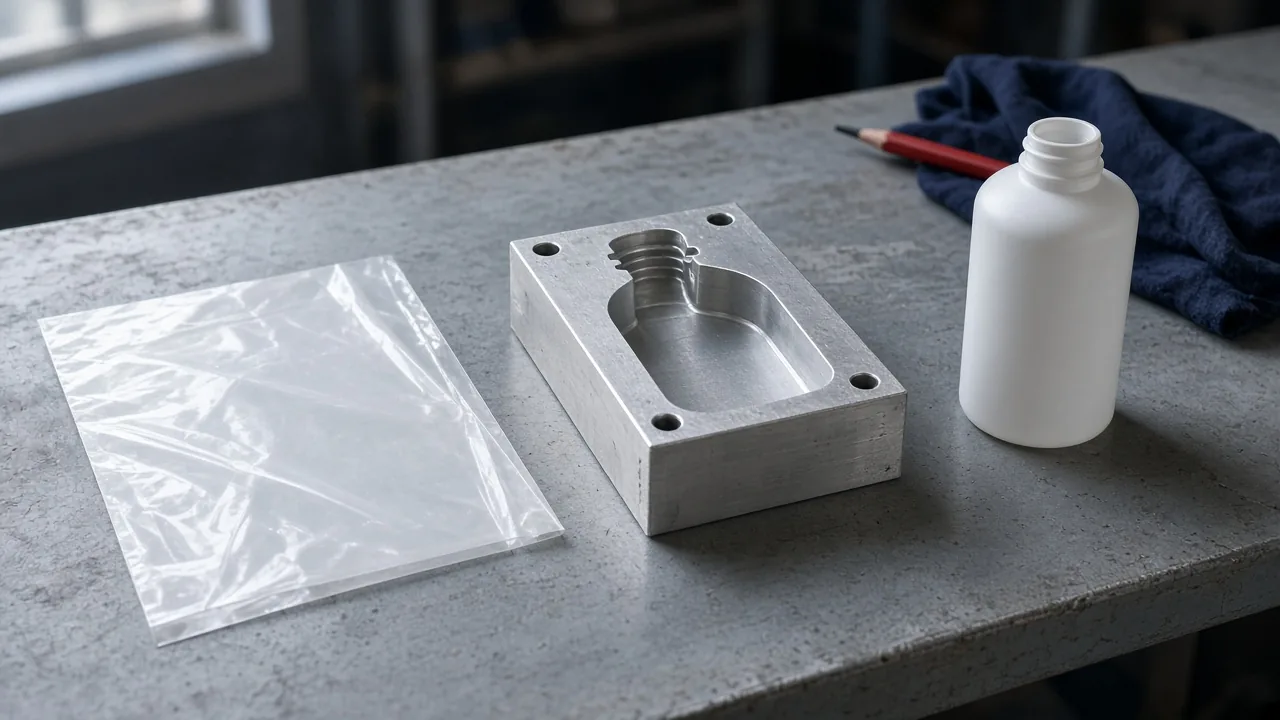
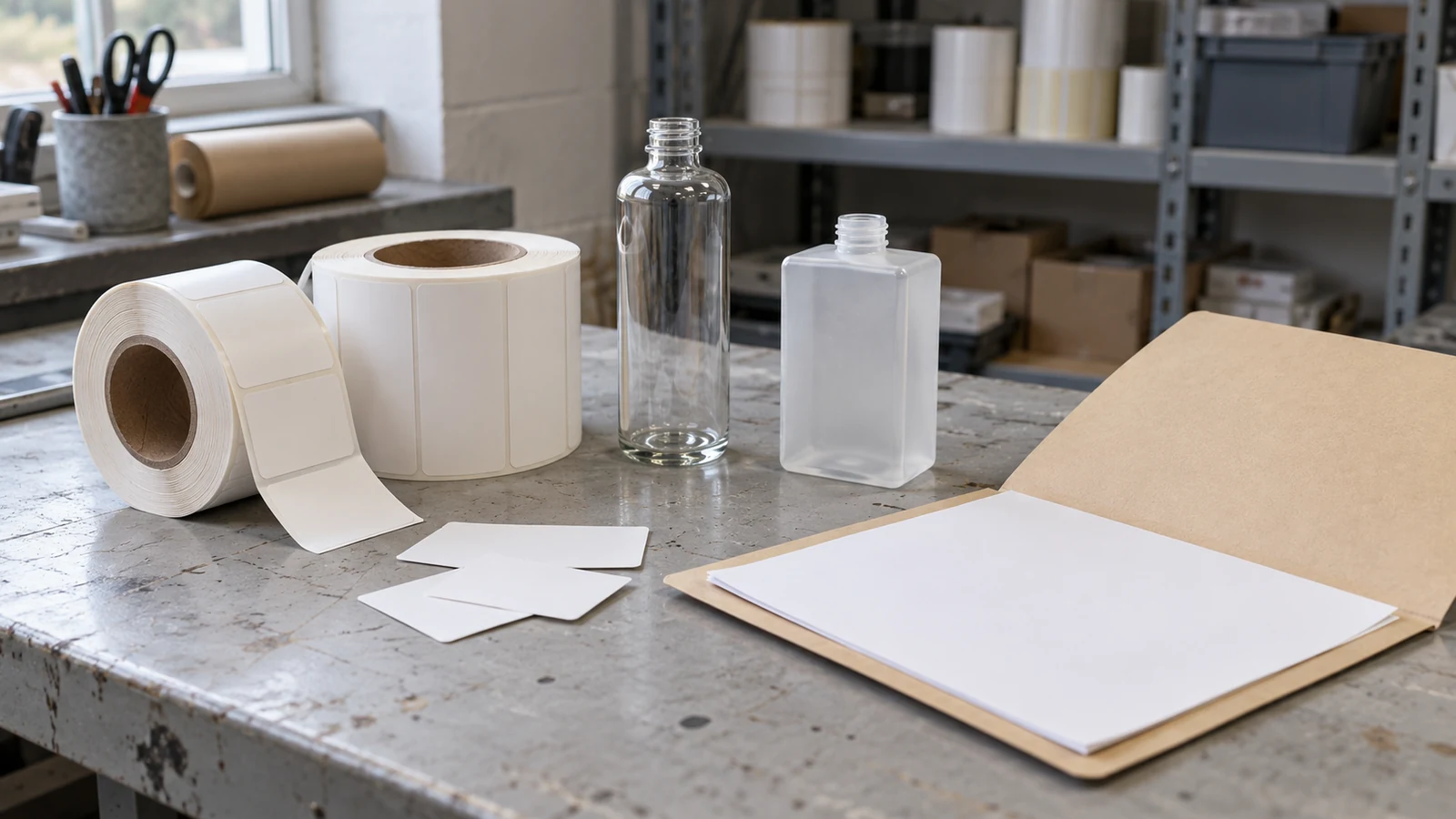
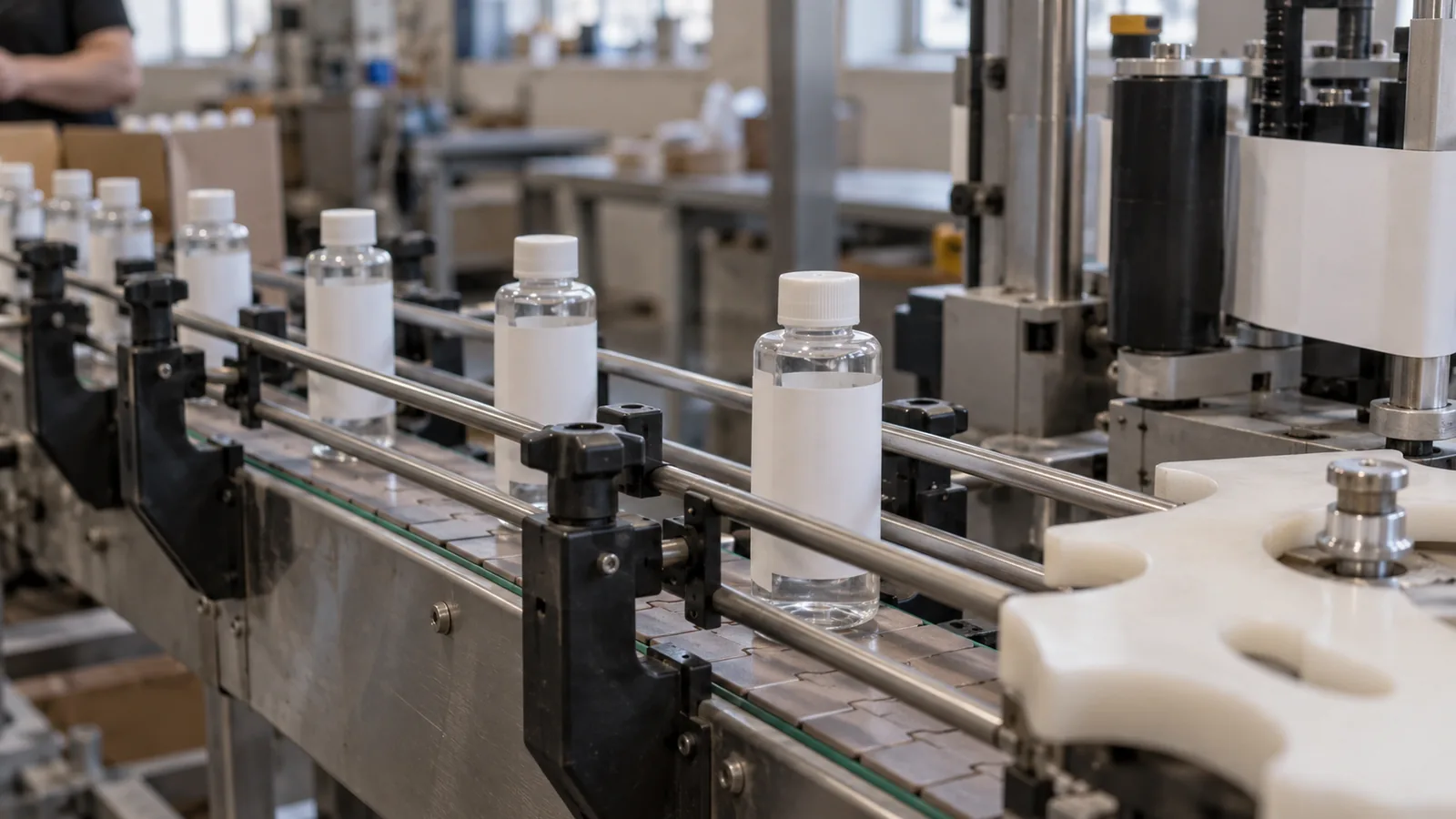
Images on this page are generated editorial photos for illustration, not actual packages, test records or performance evidence.
Start with a shared container requirement matrix
Put the package requirement in one column and require evidence from both candidate layouts on that basis. Lancing UK’s guide asks for pack dimensions, label dimensions, position, material and samples. Our matrix narrows that brief to support, orientation and label presentation so a bottle observation does not become a generic equipment verdict.
| Container constraint | Actual project requirement / reference | Inline candidate: evidence to request | Rotary candidate: evidence to request |
|---|---|---|---|
| Wall shape and footprint | ___ / to be confirmed | Proposed handling for the identified sample | Proposed handling for the same sample |
| Required support | ___ / to be confirmed | Where the package is supported during presentation | Where it is supported through the proposed circular path |
| Contact with the bottle | ___ / to be confirmed | Marked contact regions relative to label panels | The same contact-region record |
| Orientation | ___ / to be confirmed | How the identified reference reaches the labeling location | How the same reference reaches that location |
| Label positions | ___ / to be confirmed | Demonstration of each required position on the sample | Demonstration of the same positions |
| Transfer and discharge | ___ / to be confirmed | Observed posture and presentation at the boundary | Observed posture at the equivalent boundary |
Copy the matrix with a shared header for bottle/sample ID, drawing revision, bottle material and wall state, actual dimensions with units, labeling method and supplied-label identity. Mark permitted contact/support areas and intended label positions; any allowed placement deviation comes from the project, with unknown entries left unresolved.
Keep unknown candidate details as “to be confirmed.” The label-ready bottle handoff supplies surface and posture evidence at the labeling entrance. When the label enters the mold while the container is formed, use In-Mold Labels: Define the Container-Molding Handoff before this finished-container comparison. The equipment section keeps this requirement task separate from material and artwork decisions.
Takeaway: Use the same package requirement before comparing candidate handling evidence.
Define orientation relative to the label position
A label-location instruction needs a reference when its relationship to the bottle matters. Identify the panel, seam or other actual feature and show the intended label position relative to it. A front/back artwork pair alone does not establish how the candidate detects, holds or preserves that relationship.
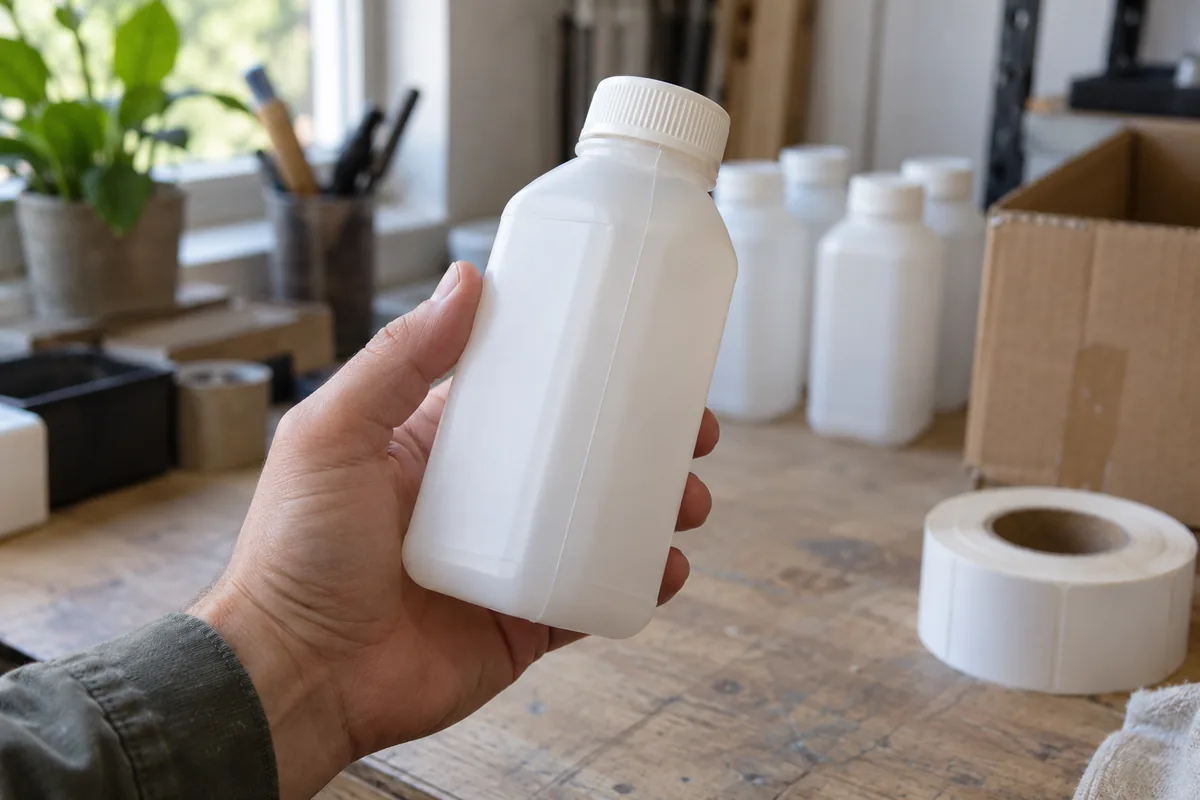
Illustrative photo — generated editorial image, not a test record, customer package or performance evidence.
Define the reference relative to the label location before asking how a candidate holds that relationship. At a glance: Back label · Reference feature · Front label · Required relationship.
| Position requirement | Package record | Candidate question |
|---|---|---|
| Front/back panels | Marked bottle reference and both label contours | How is the relationship maintained through both applications? |
| Wrap position | Outline, intended join/gap and relevant reference if any | What bottle presentation does this specific arrangement require? |
| Cap or bottom location | Closure/base sample and actual label position | Which support/contact areas remain usable during application? |
| No positional reference required | Record that decision explicitly | What support is still needed for the label task? |
Tirelli’s public inline product descriptions include different label-location arrangements. That is a useful reminder that “inline” alone does not mean only one label position. For the artwork relationship, use the clear-versus-white proof record. The Ethos historical archive separates dated case reporting from new-project requirements; use it for that historical context rather than candidate handling evidence.
Takeaway: State what must align to what before asking how the machine achieves it.
Keep indexing and inline layout separate
Morrison’s article describes particular inline indexing and rotary orienting designs. Its indexing description includes stopping grouped containers for an operation; its rotary description includes positive control through timing screws and change parts. Those are supplier-specific handling descriptions, not definitions that make every inline labeler a stop-and-index machine.
Confirm the actual labeling method and label supply for each candidate; Tirelli’s listing includes both cold-glue and self-adhesive examples, so layout does not define that method. This page records support and position requirements, while the construction guide explains the pressure-sensitive scope.
Record separately the candidate’s travel path, whether motion is continuous or intermittent, and how the bottle is held. A generic comparison borrowed from filling equipment does not establish these labeling details. Nor does the supplier article’s production threshold set a boundary for all machines.
Common mistake: Replacing a candidate’s actual handling description with the assumption “inline means indexing.”
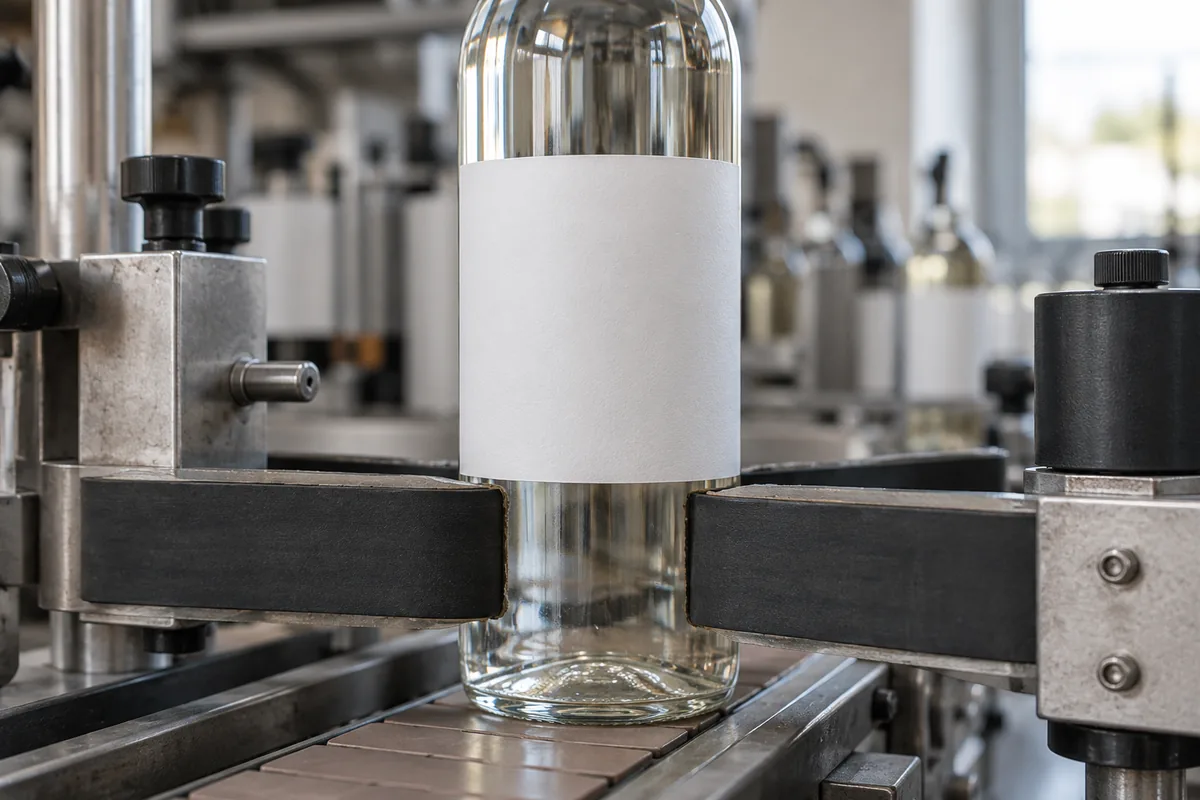
Illustrative photo — generated editorial image, not a test record, customer package or performance evidence.
Mark proposed contact areas on the actual package drawing. At a glance: Label panel · Possible contact area · Base support · Confirm on samples.
The small-bottle label-zone record can help define label panels before discussing contact areas. The pressure-sensitive construction record supplies label and liner identities that remain distinct from the machine layout.
Takeaway: Ask for the candidate’s actual motion and support arrangement, not a conclusion from its category name.
Inspect changeover evidence on the same formats
A changeover review should use the named bottle formats and label positions in the brief. Record which actual parts, contact areas and references change. This is an editorial observation checklist, not a statement that one layout is quicker or uses fewer parts across all machines.
| Item to inspect | Evidence to keep |
|---|---|
| Starting to target format | Actual A → B package/label identities and drawing versions |
| Event time | Actual start/end events and times if duration is recorded |
| Before/after samples | Separate sample and photo references for the starting and resulting formats |
| Format identity | Bottle sample, closure, fill state, labeling method and label supply identity |
| Contact/support change | Marked package areas and the candidate’s proposed parts |
| Orientation change | Old/new reference and how it is established |
| Label presentation change | Label contour, roll presentation and position drawings |
| Part identity | Names or references supplied for the actual candidate |
| Observed result | Sample photos and remaining unresolved questions |
For a moving or squeezed wall, compare the label in the BOPP, PET and PE construction matrix before attributing the observed result to layout. If a defect appears, preserve it using the bubbles, wrinkles and lifting log.
Takeaway: A changeover claim becomes reviewable when it names the formats, parts and resulting samples.
Prepare questions for a matched sample review
Use the same identified package task to make two demonstrations comparable. Keep the evidence focused on what the container and label require, and record the conditions each candidate actually demonstrated. This proposed question set is a documentation aid, not a completed trial or a comprehensive machinery acceptance program.
Keep container, label and package state identifiable when comparing layout demonstrations. At a glance: Same bottle ID · Same label ID · Inline path · Package state · Change parts · Orientation · Observed result · Rotary path.
| Question | Evidence requested | Record of the demonstration |
|---|---|---|
| Which bottle/closure/fill state was used? | Identified samples | Actual package state |
| Which label construction and contour was used? | Construction and drawing references | Actual supplied labels |
| Which reference fixes label position? | Marked bottle and proposed handling | Observed front/back or other relation |
| Where did the candidate contact/support the bottle? | Handling proposal | Actual contact regions and any visible effect |
| Which format parts were changed? | Candidate part list | Actual changed parts and unresolved items |
| What remains outside the demonstrated scope? | Written boundary | Evidence needed for the next review |
Pair the questions with this blank candidate record; underscores are unfilled project entries, not results.
| Condition/result field | Inline candidate | Rotary candidate |
|---|---|---|
| Candidate and configuration ID | ___ | ___ |
| Bottle / label supply / method IDs | ___ | ___ |
| Filled/capped state | ___ | ___ |
| Demonstration date and actual running conditions | ___ | ___ |
| Observation period and photo/sample references | ___ | ___ |
| Position/contact observations | ___ | ___ |
| Material condition differences between demonstrations | ___ | ___ |
| Unresolved scope and evidence needed | ___ | ___ |
If the project also includes an upstream MPS press, keep its planned Durst acquisition service-handover record separate from the applicator demonstration and contract scope.
Takeaway: Compare demonstrations of the same task and preserve every material difference in their conditions.
When this does not apply
This page does not prescribe a common speed, accuracy, footprint or cost advantage for inline or rotary machines. It does not supply a machine shortlist, quote or manufacturer ranking. An equipment name alone cannot establish sample handling, and neither a public guide nor a generic diagram substitutes for a candidate-specific proposal.
No PLC, energized adjustment or safety-interlock procedure is included. Support and contact areas described here are requirements to verify on actual packages, not instructions to clamp every bottle at the illustrated location.
Takeaway: Use layout names to organize questions, then assess the actual container evidence.
Method and sources
Compiled from Lancing UK’s brief guide, Morrison’s specific handling descriptions and Tirelli’s inline label-location examples, reviewed October 8, 2026. These are supplier sources. The shared matrix, position record and sample questions are editorial suggestions. Catalog speeds, a generic indexing threshold and filling-machine comparisons were not used to establish labeling suitability.
Version record: October 8, 2026 — new container-first comparison route and matched sample requirement record. October 12, 2026 — added a link to the in-mold container handoff for labels that enter during forming.
Takeaway: Public descriptions organize the questions; a candidate-specific package record supports the actual comparison.