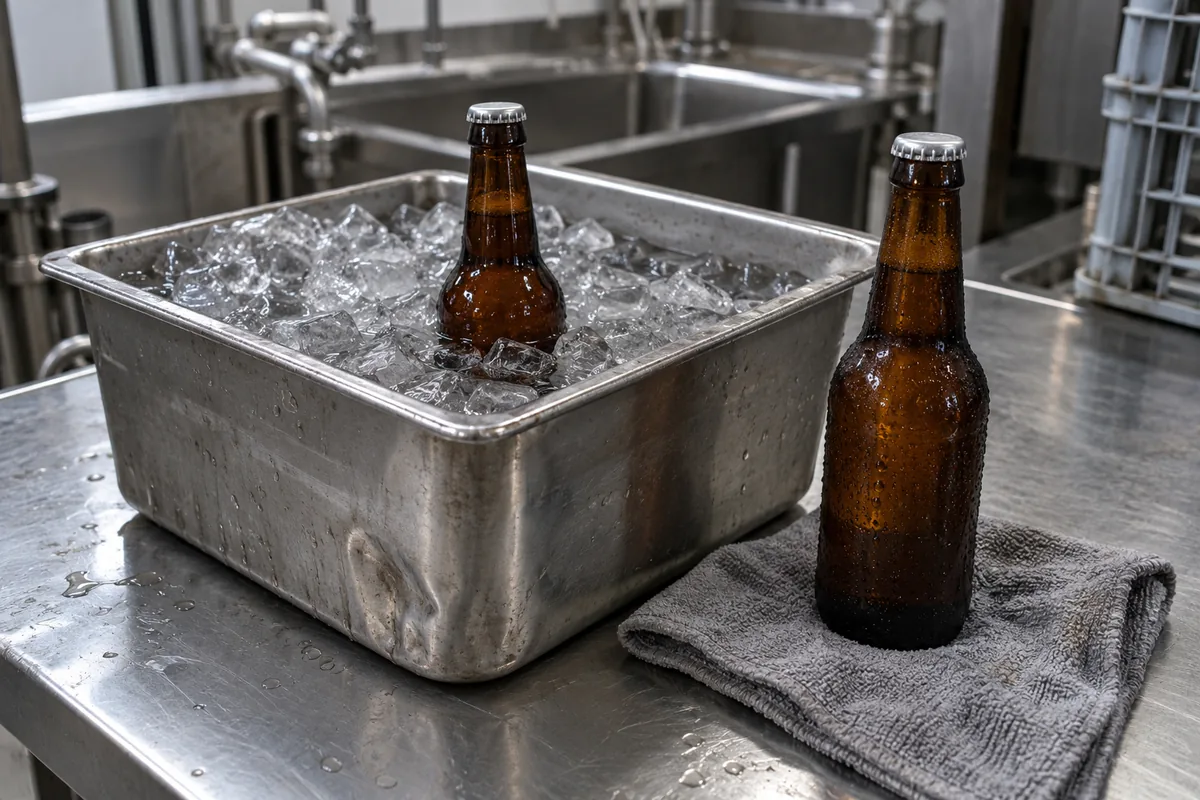
Wash-Off Labels for Returnable Bottles: Specify Use and Release Separately
Record cold-service retention and the approved bottle-washing route separately when specifying wash-off labels for returnable beverage bottles.
From material choice
to the finished bottle.
THE REFERENCE / Materials
Understand the face film, adhesive and liner before choosing a bottle label.
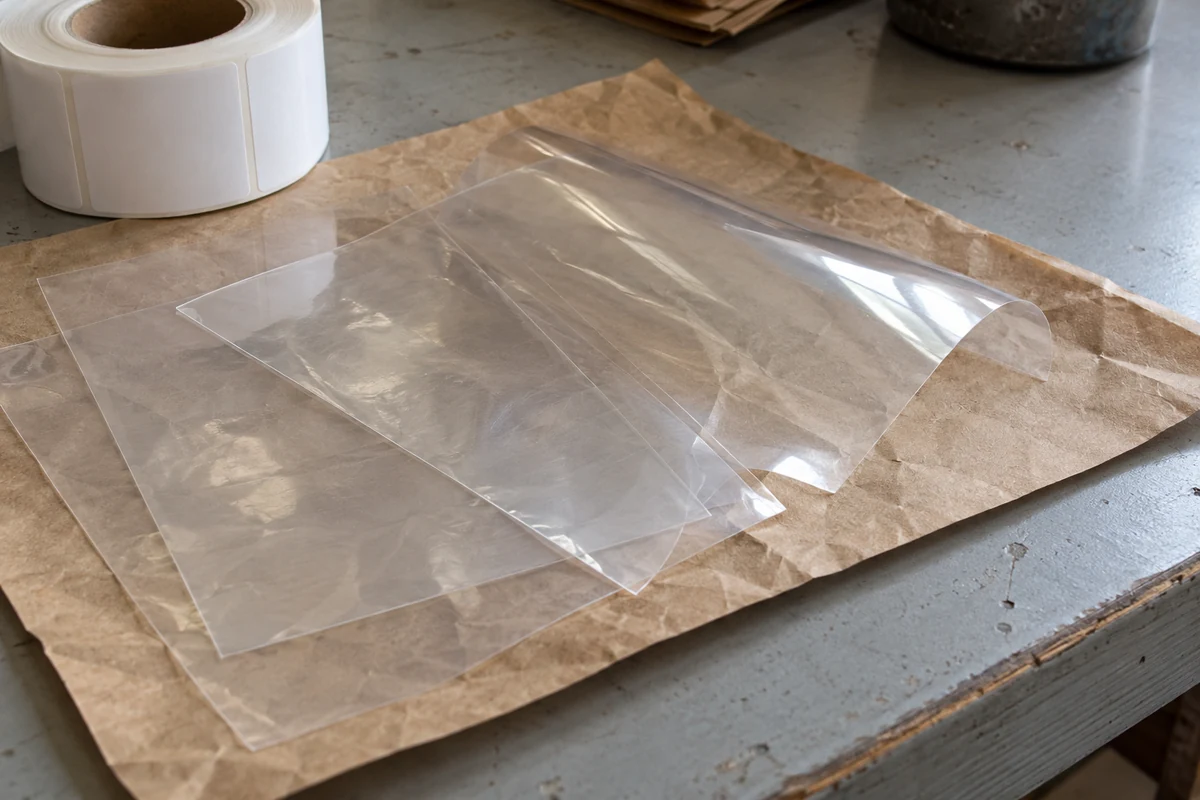
A label is a construction, not just a sheet of film. Start by separating the face material, adhesive and release liner, then describe the container surface and how the package will be handled. This section helps designers and packaging teams turn a material name into questions that can be checked against a supplier data sheet.
For a complementary view, continue to Printing & Application.
To begin a bottle-label specification, use Pressure-Sensitive Bottle Labels: Build a Construction Checklist. Keep the face material, adhesive and liner separate in the construction record.
Once the container requirements are recorded, compare BOPP, PET and PE Bottle Labels: Compare the Complete Construction. Compare the complete construction and supplier grade against the bottle rather than choosing by an abbreviation.
When a spec says easy peel or removable and you still have to name which bond lets go, use Easy-Peel vs. Removable Bottle Labels: Check Which Bond Releases. Record a liner edge and a bottle-wall release separately, and leave wash-off, peel force and residue empty until a sample shows them.
When a returnable bottle label has to hold through cold or wet service and release during washing, use Wash-Off Labels for Returnable Bottles: Specify Use and Release Separately. Record the service hold conditions and the approved washing route separately.
Record cold-service retention and the approved bottle-washing route separately when specifying wash-off labels for returnable beverage bottles.
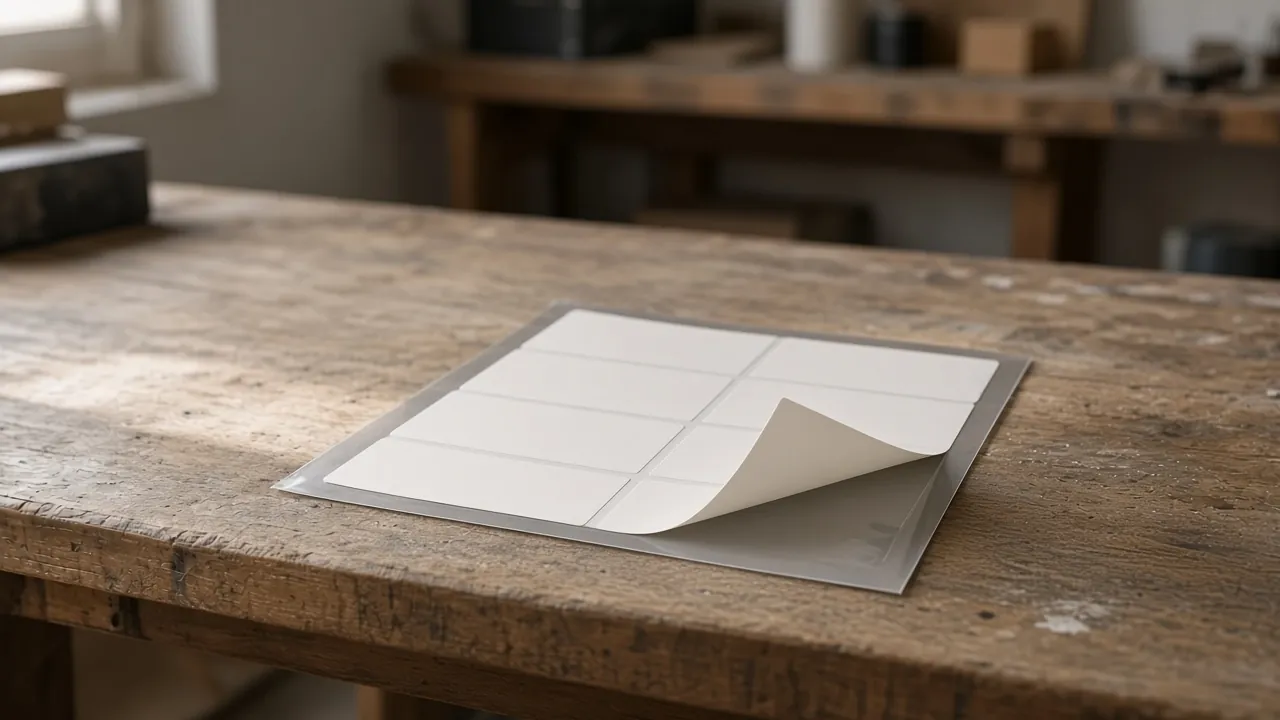
Separate a liner pop-up edge from a label that leaves the bottle, and leave material, dwell time and residue blank until a sample shows them.
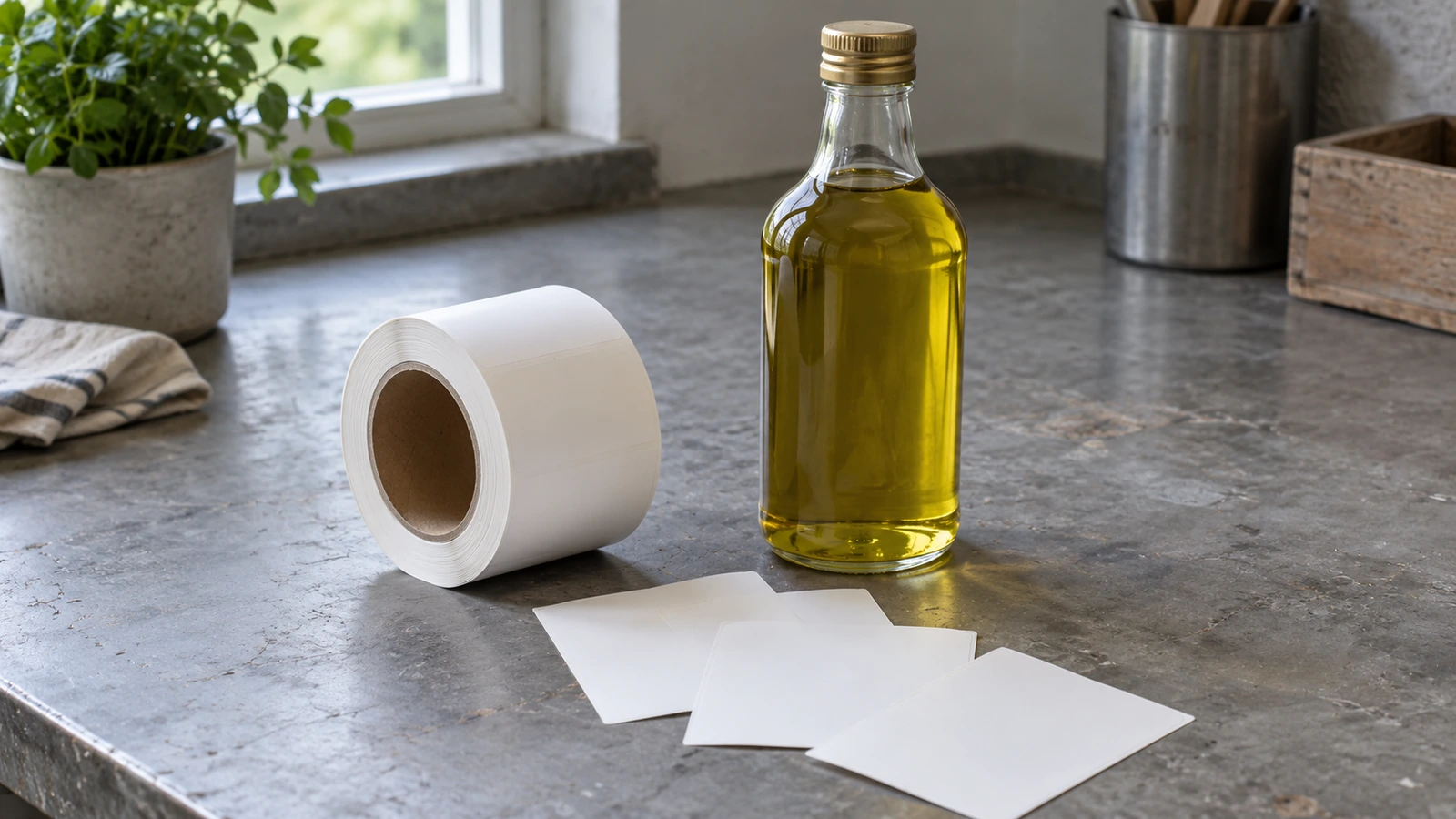
Evaluate UPM's Asendo 80 face-paper announcement through an identified label construction, supplier documents and a trial under your production conditions.
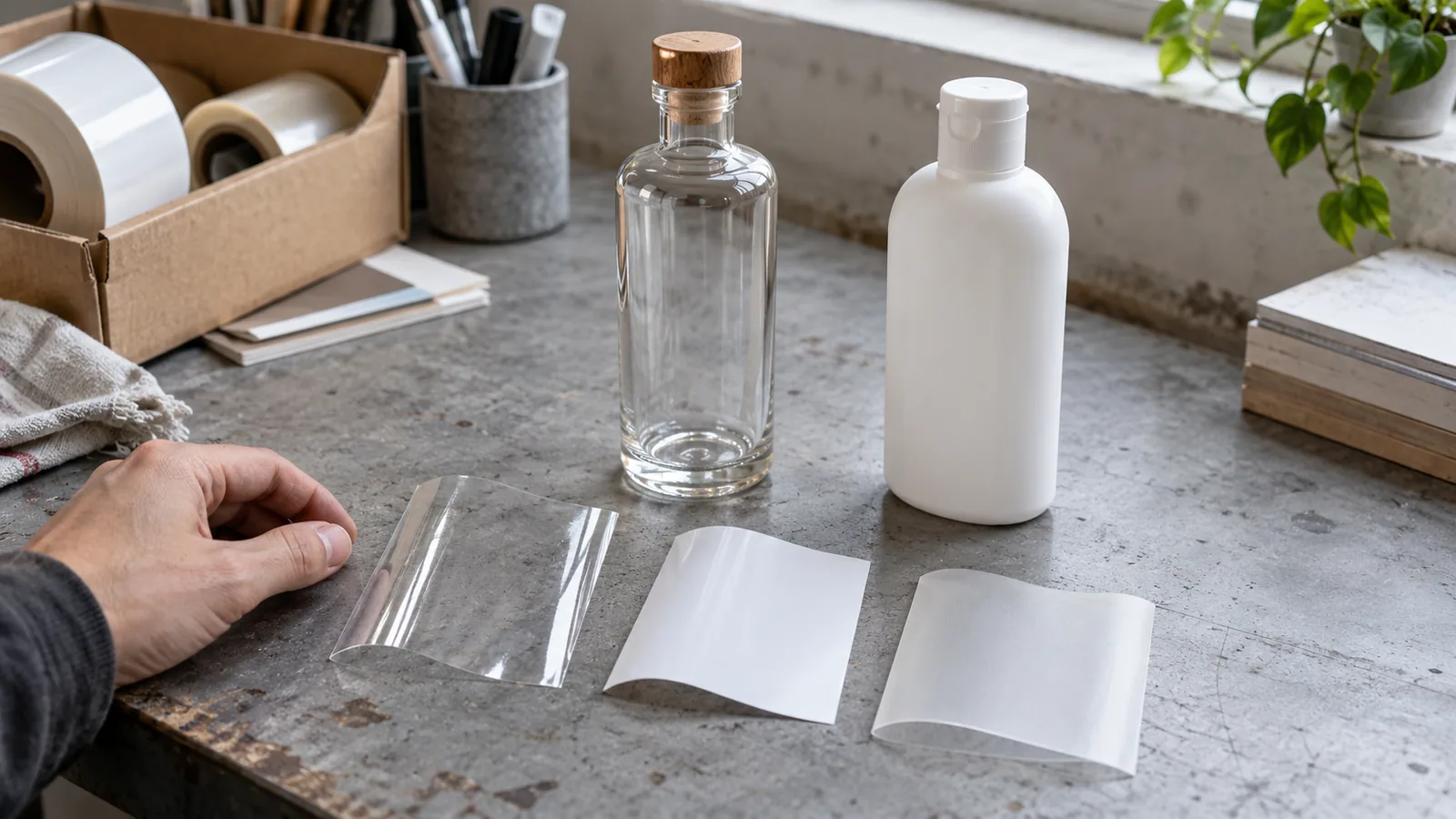
Compare identified film constructions against bottle rigidity, curves and squeezing, with supplier-grade evidence and unknown fields kept visible.
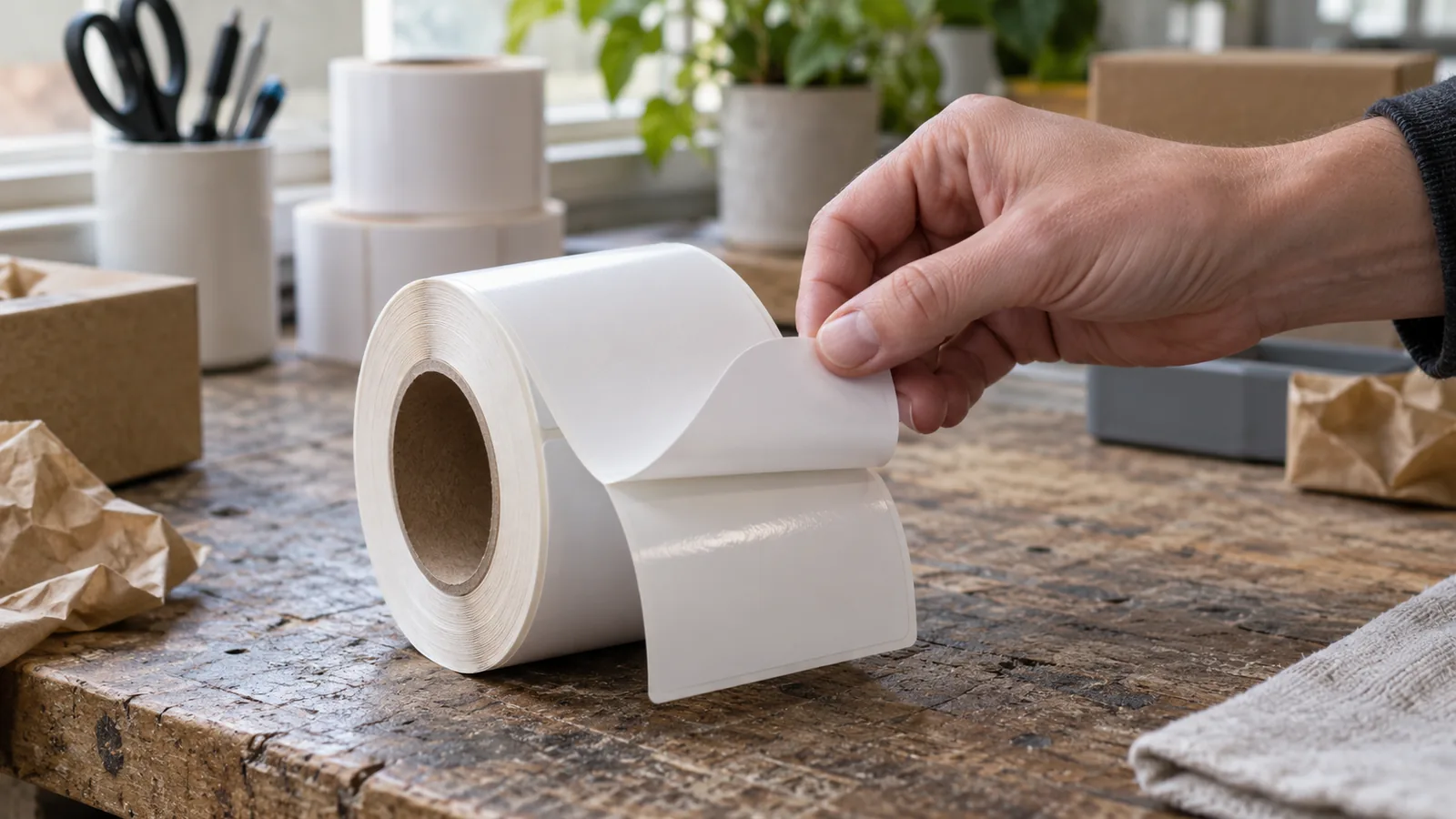
Record face material, adhesive and liner separately, then connect the complete bottle-label construction to application and use conditions.