A flat artwork approval fails when the inner panels are still shut on the bottle. On the actual container, record the closed cover, the first opening, the order of the opened panels, and whether the label recloses, and note which language or instruction sits on each panel.
Proof the opening on the container using the feature the supplier named: a tab, a peel, an overlap, or an empty cell when that page names none. Multi-Color Corporation’s page, fetched October 11, 2026, describes multi-ply webs, a single web that overlaps itself, booklets and folded top plies on a pressure-sensitive base with clear film, and a tabbed label it calls EasyTab. It says some of these labels are harder to open than others. CCL Healthcare describes a booklet or leaflet in a self-adhesive laminated label opened by an adhesive tab. Its blog, fetched the same day, adds page indexing, a resealable closure, and up to 48 pages from a single sheet. Inovar Packaging (June 20, 2023) describes a cut-and-stack dual-ply peel-and-reveal label with adhesive on only part of the label and up to three printed sides. The tables below are an editorial checklist compiled from those supplier pages.
| What to have in hand | Where it comes from | Why it belongs on the record |
|---|---|---|
| Construction name | The supplier’s specification for this label | The sources describe different ways of adding panels |
| Container sample | The bottle or can this label is applied to | The reading order is what a person can reach on that container |
| Artwork revision | The file that was printed | Each panel’s language and role have to match that revision |
| Opening feature | The feature the supplier names, or an empty cell | A tab, a peel, and an overlap are different starts |
| Four observations | Closed, first opening, opened panels, reclosed | A flat file does not show whether the inner panels can be reached |
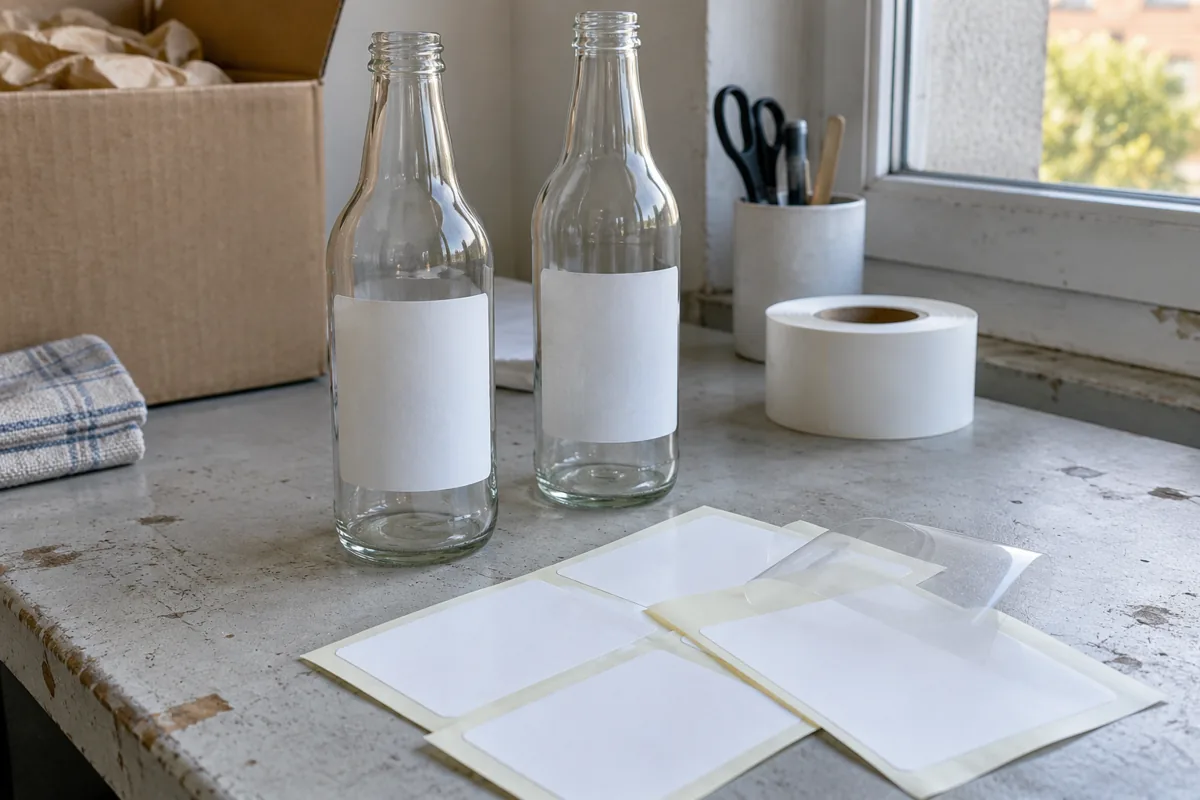
Photographs on this page show blank labels on a plain bottle and on a bench.
Name the construction before you look for an opening
The feature you try to open depends on the construction the supplier named. An empty cell means the fetched page did not state that item. Copy a count only when your supplier states one for this label. Multi-Color’s 2, 3, and 4-ply range, CCL’s “up to 48 pages from a single sheet,” and Inovar’s dual-ply label with up to three printed sides are three different statements, each tied to the construction in its row.
| Construction, in the source’s words | Source | How the extra panels are made | Opening feature the source names | Reseal the source mentions | Count the source states |
|---|---|---|---|---|---|
| Multi-ply (2, 3, and 4-ply) | Multi-Color, fetched October 11, 2026 | Two or more webs of material | 2, 3, and 4-ply | ||
| 360° and greater wraps | Multi-Color, fetched October 11, 2026 | A single web. Extra panels come from the label overlapping itself during application | |||
| Booklets and onserts | Multi-Color, fetched October 11, 2026 | A paper booklet held to an oversized pressure-sensitive bottom panel with a clear film lamination | |||
| Plow fold | Multi-Color, fetched October 11, 2026 | A folded paper top ply held to an oversized pressure-sensitive bottom panel with a clear film lamination | |||
| EasyTab | Multi-Color, fetched October 11, 2026 | A booklet with a tab. Multi-Color says it could also be 2-ply and beyond | Tab | ||
| Expanded content leaflet | CCL Healthcare leaflet page, fetched October 11, 2026 | A booklet or leaflet in a self-adhesive, fully laminated label | Adhesive tab, used to open the label and reach the information inside | ||
| Expanded content label | CCL Healthcare blog, fetched October 11, 2026 | A booklet or leaflet in a self-adhesive, fully laminated label with an adhesive tab | Adhesive tab | Resealable for multiple use. No cycle count is stated | Up to 48 pages from a single sheet |
| Cut-and-stack dual-ply peel-and-reveal | Inovar Packaging, June 20, 2023, fetched October 11, 2026 | Adhesive or glue on a portion of the label. Dual-ply white or metalized film. Wraps a full 360 degrees, described as primarily used on cans | Peel-and-reveal | Resealable | Dual-ply, up to three printed sides |
Inovar states the partial adhesive for cut-and-stack labels. Multi-Color states a pressure-sensitive bottom panel for booklets and plow folds. Write the adhesive description on the row that names it. A face, adhesive, and liner for a label applied to a finished bottle belong on the pressure-sensitive construction checklist.
CCL’s leaflet page also names Single Ribbon, Multi-Ribbon, Multi-Wrap, Encapsulated, Removable, and Attached leaflets. The fetched text gives those names as headings and does not define a separate opening for each one, so the opening cell for those names stays empty until a drawing fills it.
Takeaway: Write the supplier’s construction name, and the opening feature that page actually names, before you describe how the sample opened.
Record four states on the container
Closed, first opening, opened, and reclosed answer different questions. Use one container sample for all four, and give each photograph an ID.
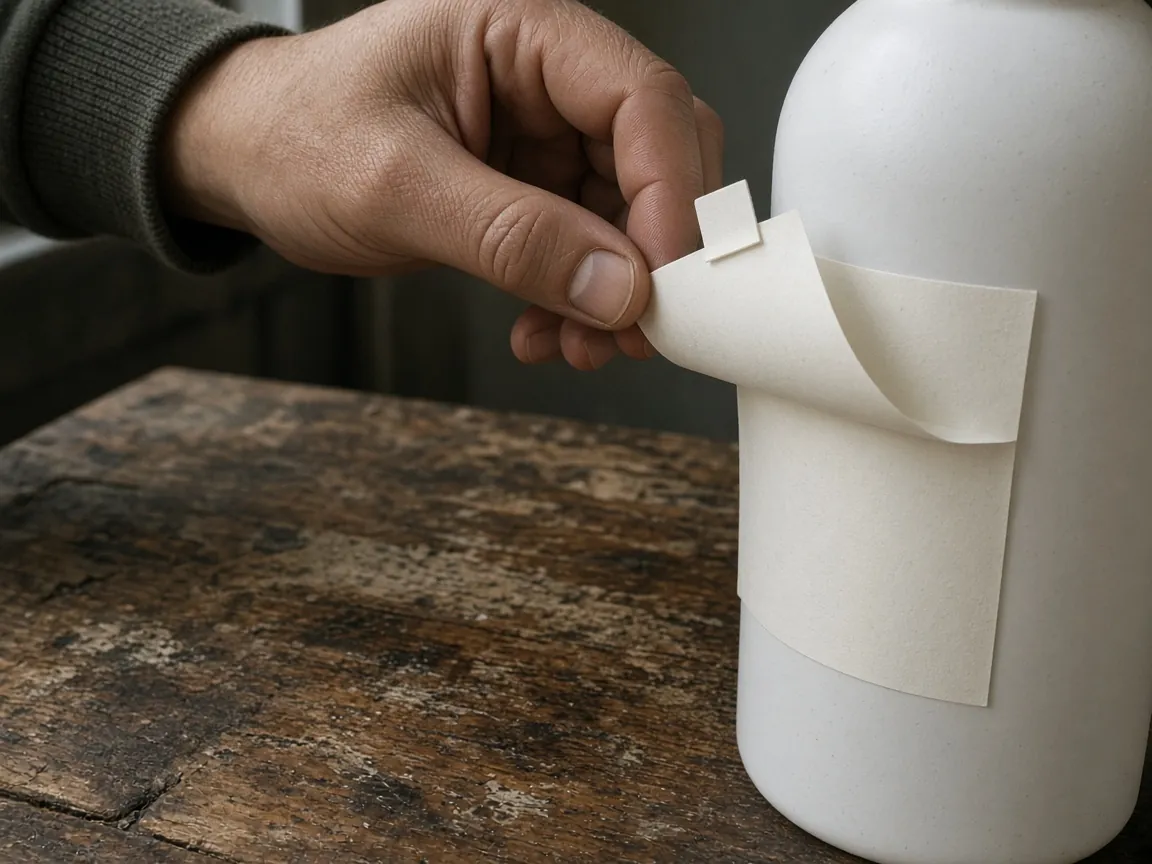
A hand lifts a small blank tab on a cream label so a second blank sheet shows on a white bottle.
| State | What you are checking | What the fetched pages give you | What you write from the sample |
|---|---|---|---|
| Closed | Which panel is visible before anyone opens the label | The booklet descriptions start from a label that holds further panels inside | Container ID, visible panel, artwork revision |
| First opening | Where the person starts, and whether that start matches the named feature | CCL names an adhesive tab. Multi-Color names a tab on EasyTab and says some labels are harder to open. Inovar names peel-and-reveal for its cut-and-stack dual-ply label. The wrap row names an overlap during application and does not name a separate opening feature | The feature you used, whether it opened, photo ID. Leave the feature empty when the supplier has not named one |
| Opened | Which panels can be read, and in which order | CCL’s blog says indexing of pages lets a user reach specific information | Panel order as you turn the pages, and any index mark the sample actually has |
| Reclosed | Whether the label returns to a closed state you can describe | CCL’s blog says resealable for multiple use and states no cycle count. Inovar calls its dual-ply cut-and-stack option resealable. Multi-Color’s fetched page does not describe a reseal for every construction | Whether this sample reclosed, and what the edge looked like |
Common mistake: Approving the flat artwork while the inner panels are still closed, then treating that file as the order a person will read on the bottle.
If the question is how much of a small bottle or jar can carry any label, use the small bottle and jar label-zone record. This page starts once that area exists and asks whether the panels on it can be opened and read. Appearance of a clear or white cover belongs on the clear vs. white artwork proof. If the edge stays lifted after you try to close it, record the symptom in the bubbles, wrinkles and lifting record before you assign a cause.
Takeaway: Photograph the four states on one container, and write the panel you could actually read in each state.
Index each panel by language and role
Multi-Color’s multi-lingual section says a product sold where more than one language is spoken may need more than one language on the label, and it poses the choice between one label and several SKUs. CCL’s leaflet page says the label can be printed in multiple languages. CCL’s blog says indexing of pages lets a user reach specific information. The index below is where you attach a language and a role to a panel ID. It does not set a type size or a required page count.

Blank cream sheets fanned in a stack on a worn wooden bench, with part of a white bottle at the right edge.
| Panel ID | Visible when | Language | Role on this revision | Artwork revision | Index mark on the sample |
|---|---|---|---|---|---|
| 1 cover | Closed | ___ | ___ | ___ | ___ |
| 2 | First opening or opened | ___ | ___ | ___ | ___ |
| 3 | Opened | ___ | ___ | ___ | ___ |
Underscores are blank project entries, not measured values. Add a row for every further panel the sample actually has. Roles you can name from the copy, such as instruction, warning, or promotion, stay in the words of that revision. A panel with no language stated yet keeps an empty language cell.
Takeaway: Give every panel an ID, a language, and the state in which you could read it.
Keep the sample on one row

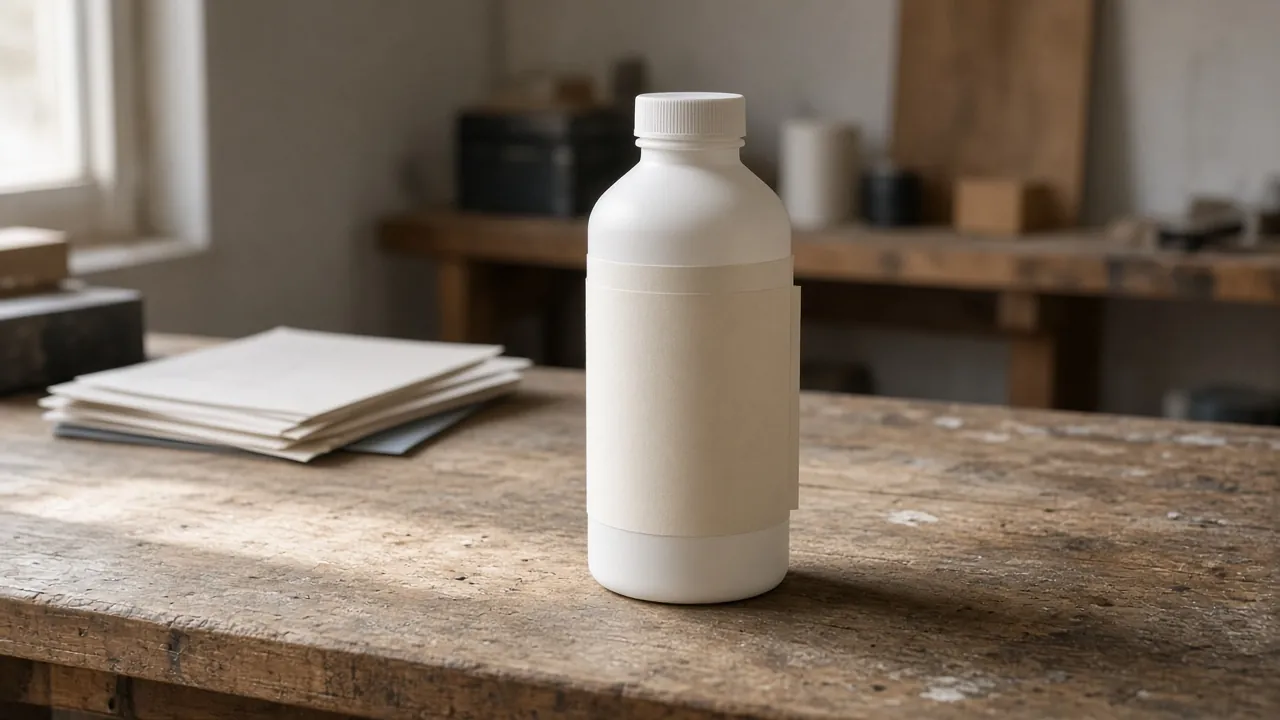
A white bottle with a closed blank cream label sits on a worn bench beside a window.
| Field | Entry |
|---|---|
| Shared record ID | ___ |
| Construction name, as the supplier states it | ___ |
| Container ID | ___ |
| Artwork revision | ___ |
| Opening feature the supplier named | ___ |
| Closed: visible panel | ___ |
| First opening: what you did and what happened | ___ |
| Opened: panel order | ___ |
| Reclosed: what the edge did | ___ |
| Photo IDs | ___ |
| Still empty | ___ |
The printing and application section keeps this opening record with the other application proofs. A sleeve that shrinks onto the bottle is a different proof: the shrink sleeve artwork record follows artwork through the shrink, and it does not record an opened panel.
Takeaway: One row should hold the construction, the container, and the four observations.
When this record stops
Food and drug labeling rules, a minimum type size, a required page count, a packaging reduction, and a cost reduction sit outside this record. Multi-Color’s page discusses regulatory copy, cartons, and promotions as reasons a brand might want more label space. Those are Multi-Color’s scenarios. Peel force and an opening-cycle count are absent from the four pages read here. Inovar’s partial adhesive, 360-degree wrap on cans, and three printed sides stay on the cut-and-stack row.
Takeaway: Use the record to show which panels a person could open and read on this container.
Method and sources
Compiled from Multi-Color Corporation, “How to leverage Extended Content Labels for maximum benefits”; Inovar Packaging, “What Are Extended Content Cut and Stack Labels?” (June 20, 2023); CCL Healthcare, “Expanded Content Labels - Leaflets Overview”; and CCL Healthcare’s expanded-content-label blog. All four pages were fetched on October 11, 2026, and read for this article on October 14, 2026. All four are supplier-authored.
Left off the record: Multi-Color’s carton scenario, Inovar’s content-increase claim and its durability and shelf-life statements, and CCL’s quality-system and equipment claims. The four-state record, the panel index, and the sample row are editorial. Our editorial policy explains how sources are handled.
Version record: October 14, 2026. New opening and reading-sequence record for extended content labels.
Takeaway: The sources name the constructions. The container sample shows which panels could be opened and read.